Field research in religious studies, sound recording, 2026
Paper presented at the symposium ‘A Generation On – New Theories, Methodologies, Spatial Inquiries, and Research Directions with SWANA Youth’, organised by IFPO / MMU, May 2026
Abstract
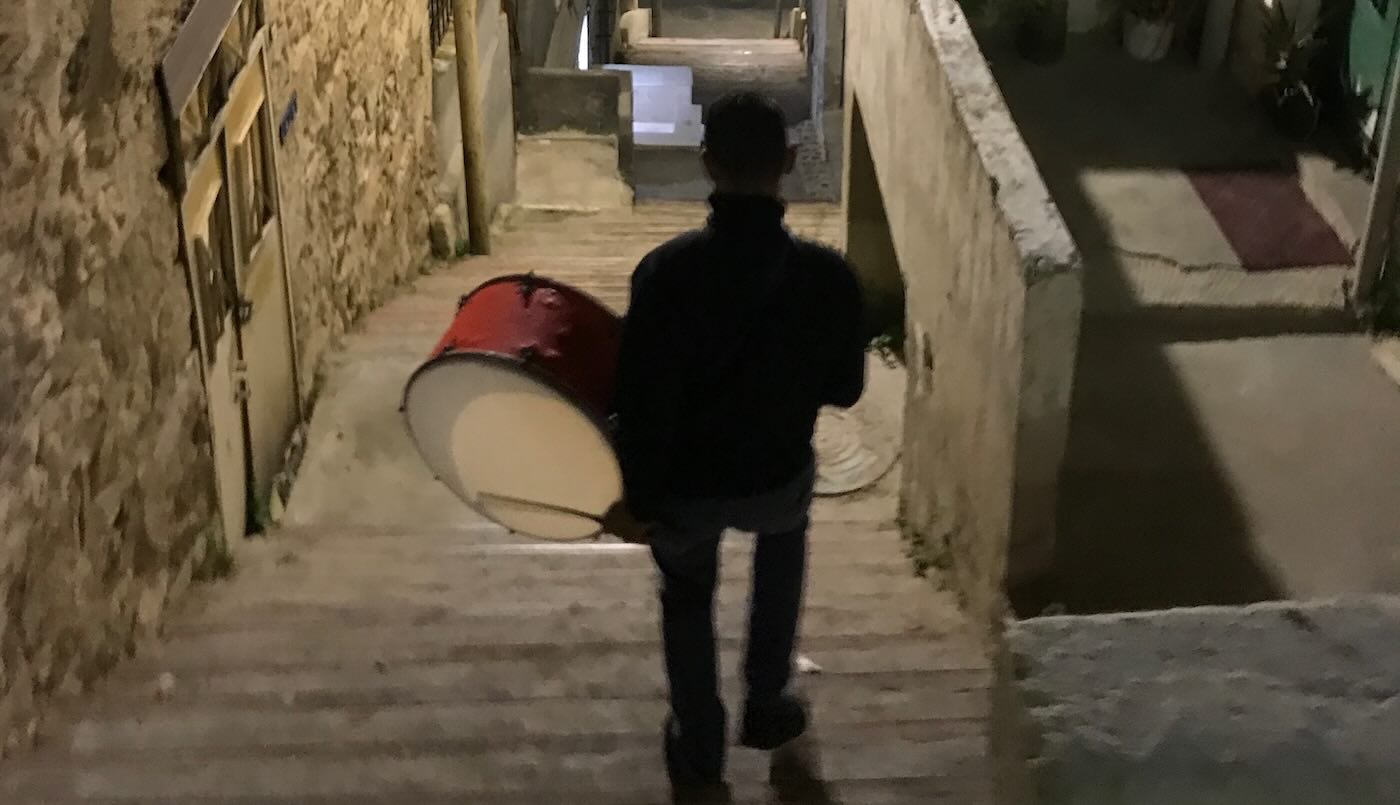
Based on a fieldwork conducted in Amman in 2024, this contribution explores a ritual well known across SWANA but little studied by the academic literature. Despite obvious competition from alarm clocks and mobile phones, street drummers or ‘awakeners’ (known as _musaharati_ in Arabic) continue to shape the soundscape of Ramadan nights in many cities of Islamic culture. Alone or with a few colleagues, the _musaharati_ roam the streets of a neighborhood beating a drum and chanting formulas to wake residents for the _suhoor_ meal, before dawn. Our study aims to identify the dynamics of the practice in Amman's downtown neighborhoods and the reasons for its resistance to modernity. It brings together the ethnographic observations during the nights of Ramadan, interviews with _musaharatis_, survey results and an analysis of online comments.
Matériau sonore collecté
Différents type de « recitations », plus ou moins chantées,
Bruits exprimants le contexte de la déambulations nocturnes, chiens aboyants, résidents interpellants, alarmes de voitures déclenchées.
This research outlines the differences between elder and young practitioners, but also, in a diachronic approach, how the ritual is performed today and how it was in the past. Our findings show a non-regulated and pluralistic practice generally appreciated by the residents. While more young people embrace this seasonal self-employed role than in the past, they also participate in its reconfiguration. Changes include greater mobility between home and performance sites, greater anonymity, territories delimited by sound range to save time, gathering in groups, and varying levels of religious devotion among practitioners. It then appears that the aspiration for a space and time of freedom may be a key motivator, surpassing the desire to preserve tradition, seek financial gain or contribute socially or spiritually. Exploring the category of youth by the entry of their participation to this ritual offers a panorama of different situations faced by Amman's youth, even within the same disadvantaged community. It also questions the capacity of the younger generation to seize the opportunity of a para-religious tradition to create spaces of relief and transgression amid various pressures, from the struggles of daily life and structural unemployment to the restriction on expression of solidarity with Gazans.
Download
Full text in French of the research report
Project presentation for the IFPO/MMU Symposium: A Generation On – New Theories, Methodologies, Spatial Inquiries, and Research Directions with SWANA Youth, 2026