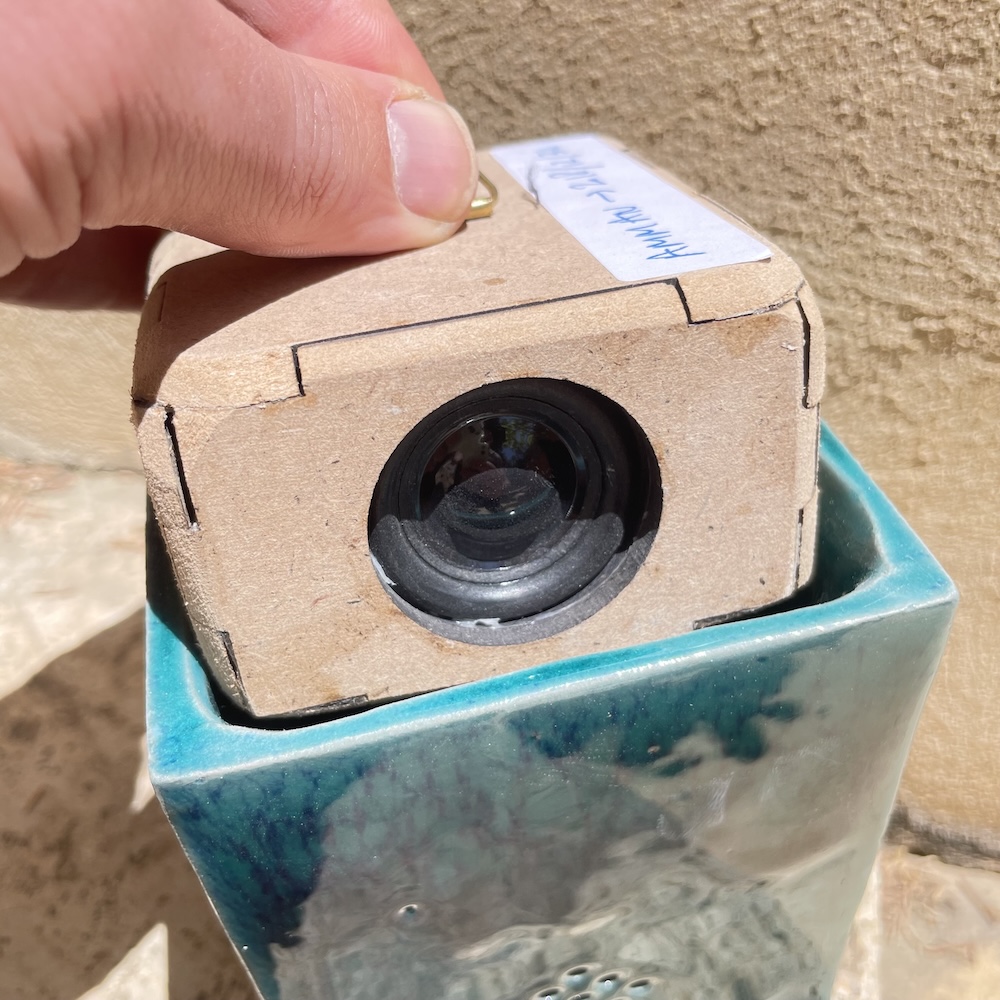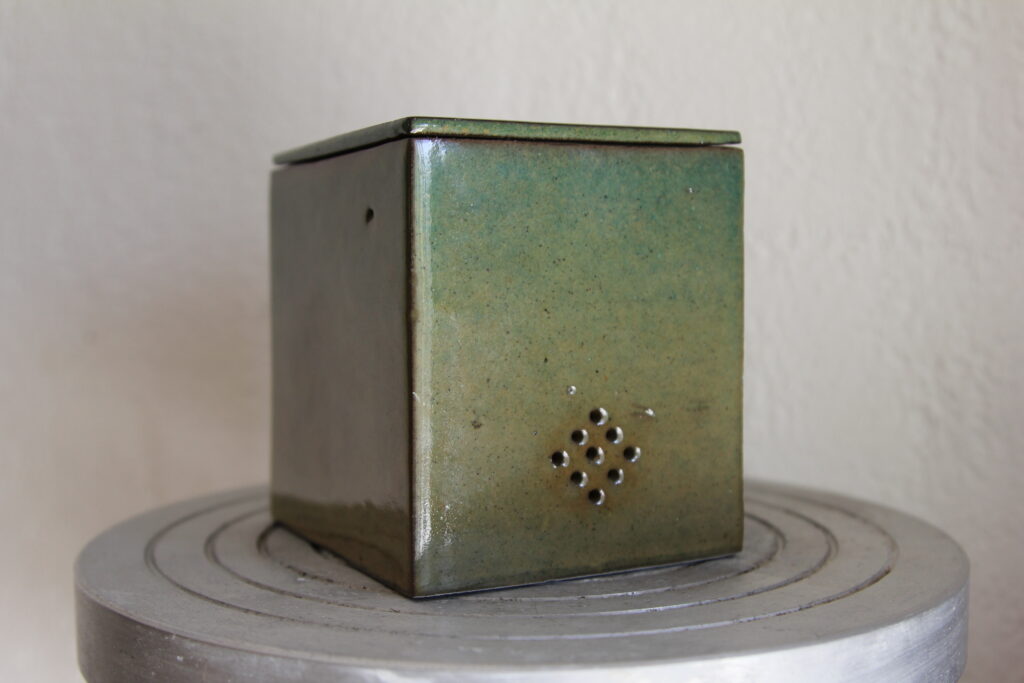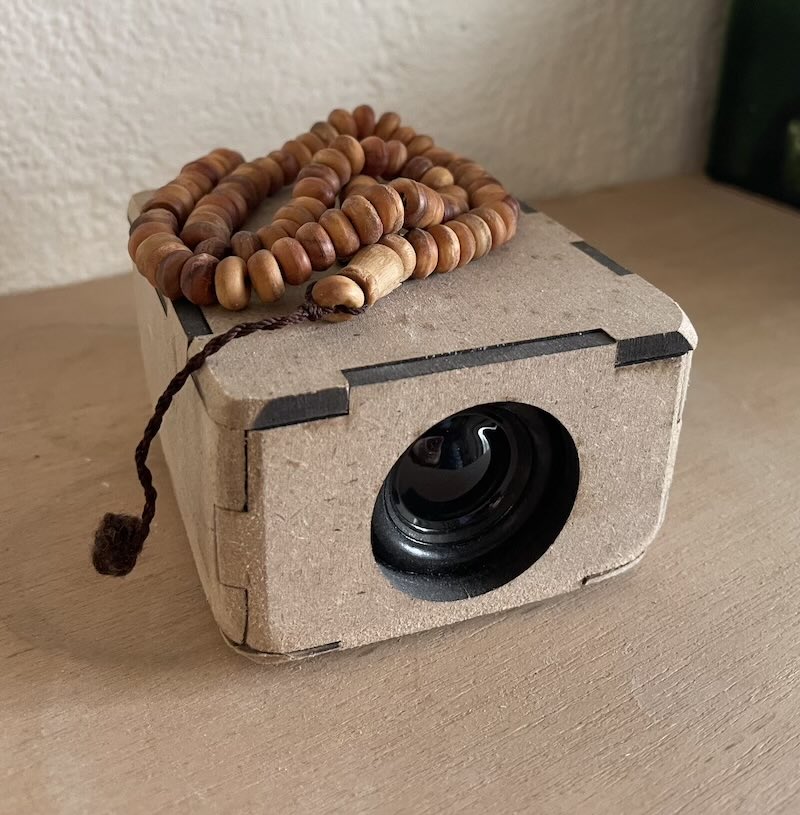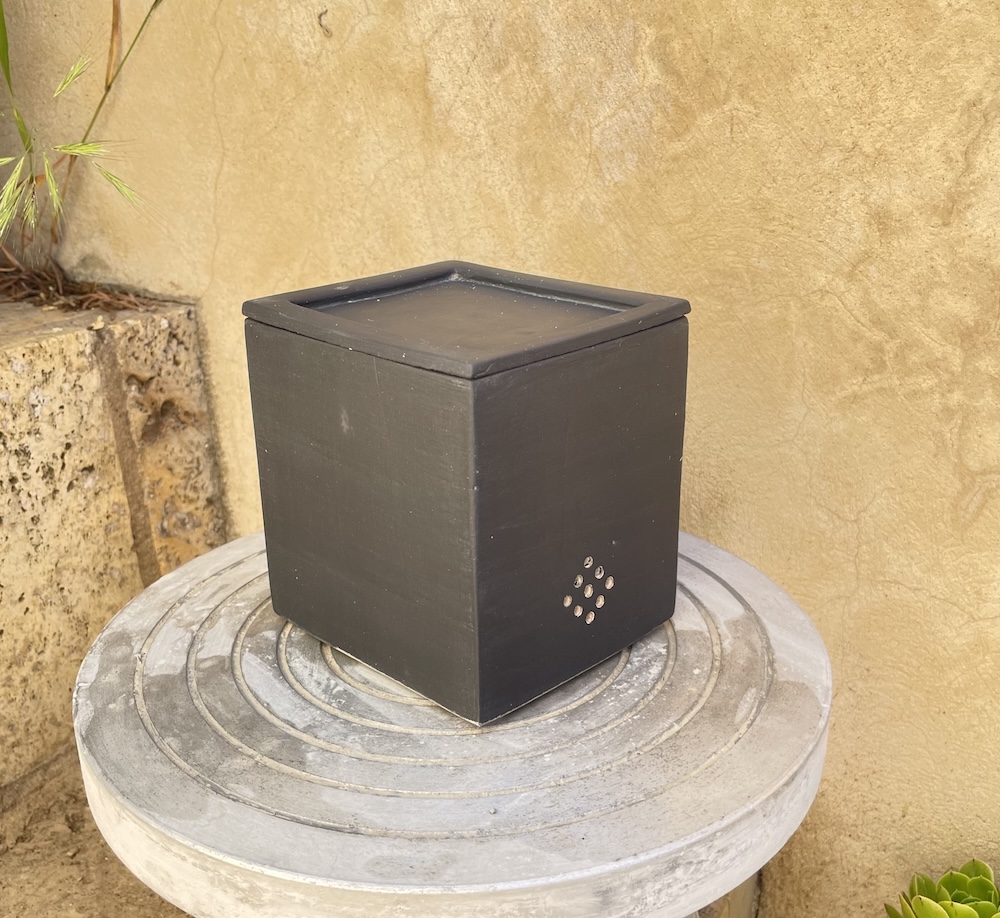

Modelled on the dimensions of the Ka’aba, Islam’s holiest site, each ‘prayer box’ (Adhan Box) contains a sound device that plays five different calls to prayer at the precise time of the adhan, depending on the specific location.
The main feature of this ‘impromptu player’ lies in the selection of a variety of voices for the adhan. Collected and chosen for their beauty, these voices express the concept of unity in diversity.
Listen below to the call to prayer performed by Mai Kamal, an Egyptian singer.
This call is scheduled to be played by the Adhan Box at the start of the night prayer (‘isha).
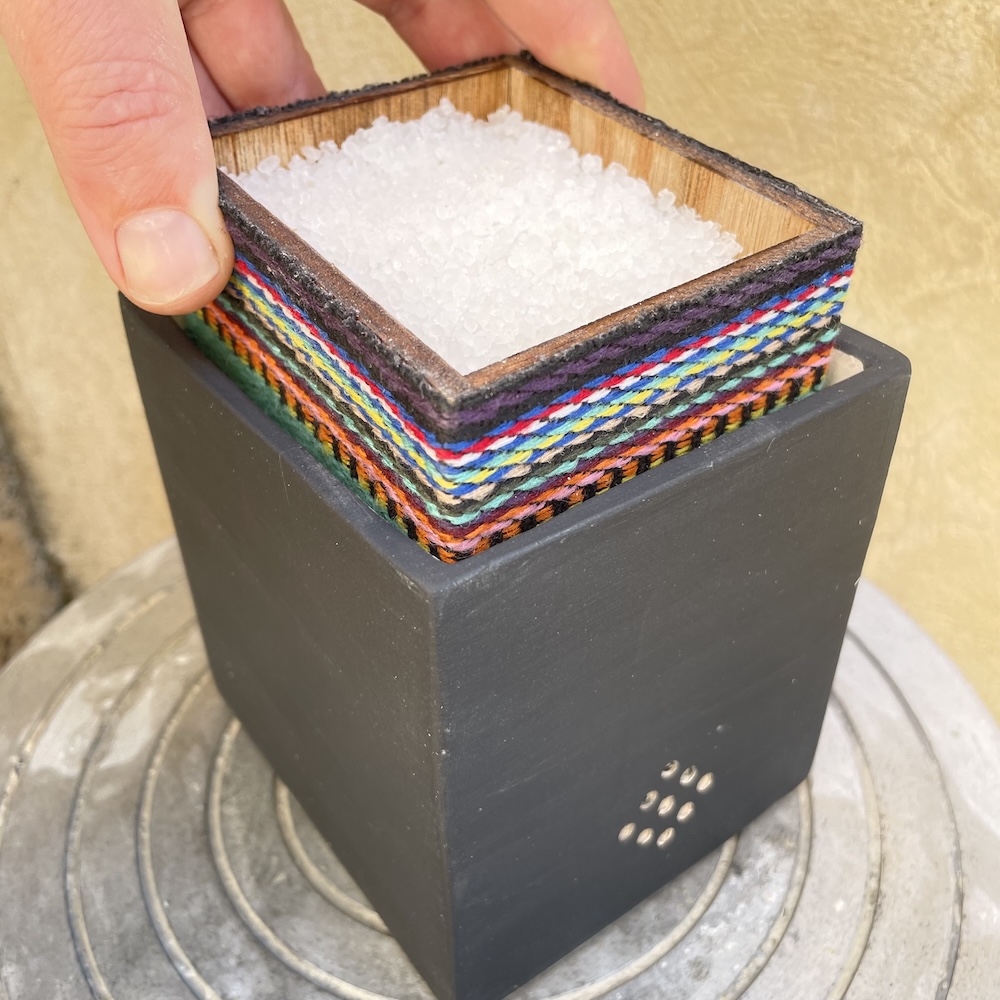
Upon lifting the lid, a first wooden box, lined with traditional Arabic fabric,contains a natural material: salt gathered from the shores of the Dead Sea, sand, or pigments collected from a Jordanian valley. To us, these elements symbolise the multitude of the faithful, who seek a form of simplicity through their act of prayer. In Islam, salt is considered a purifying element.
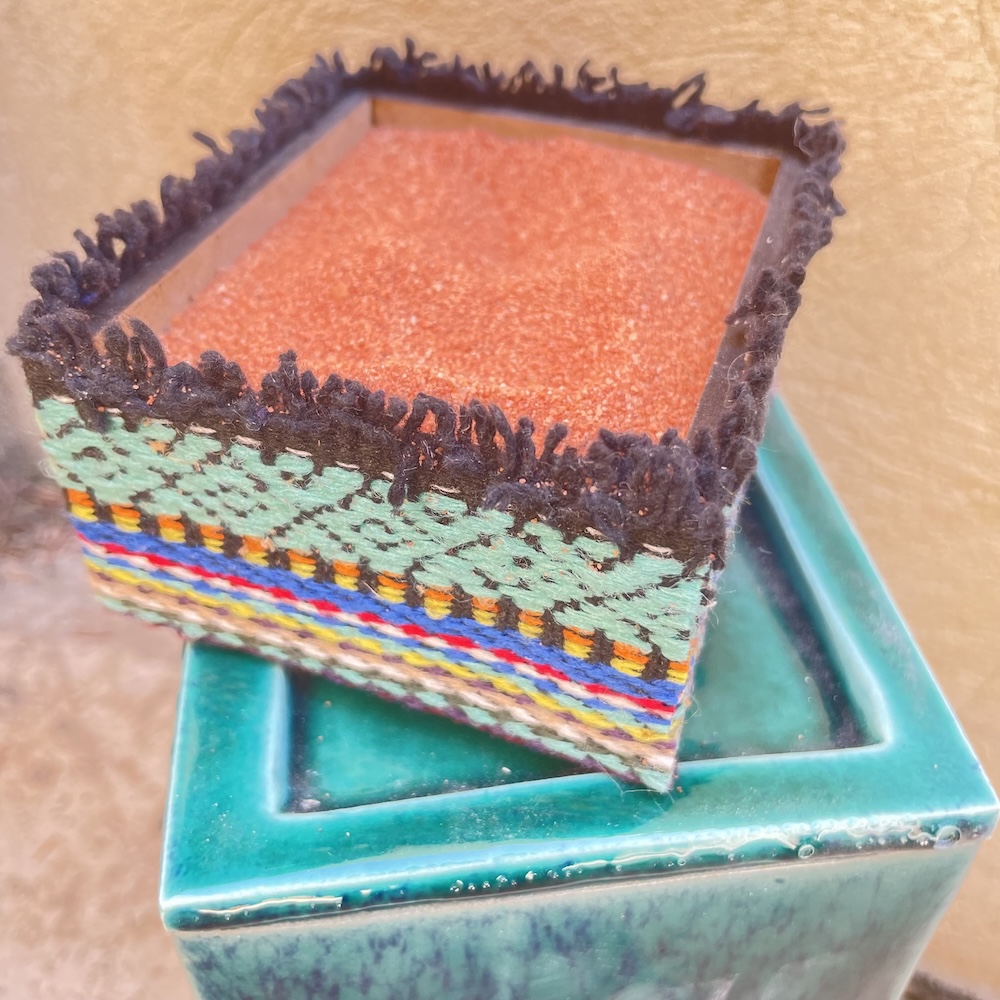
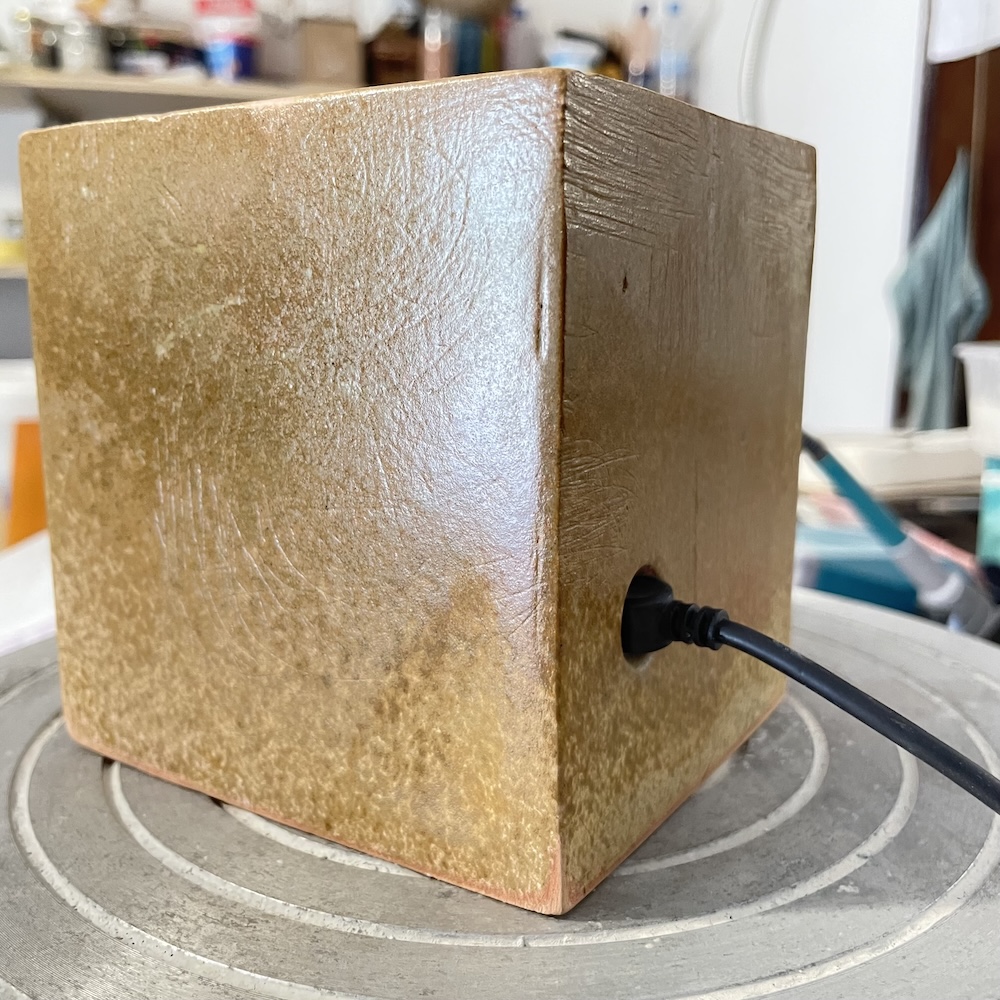
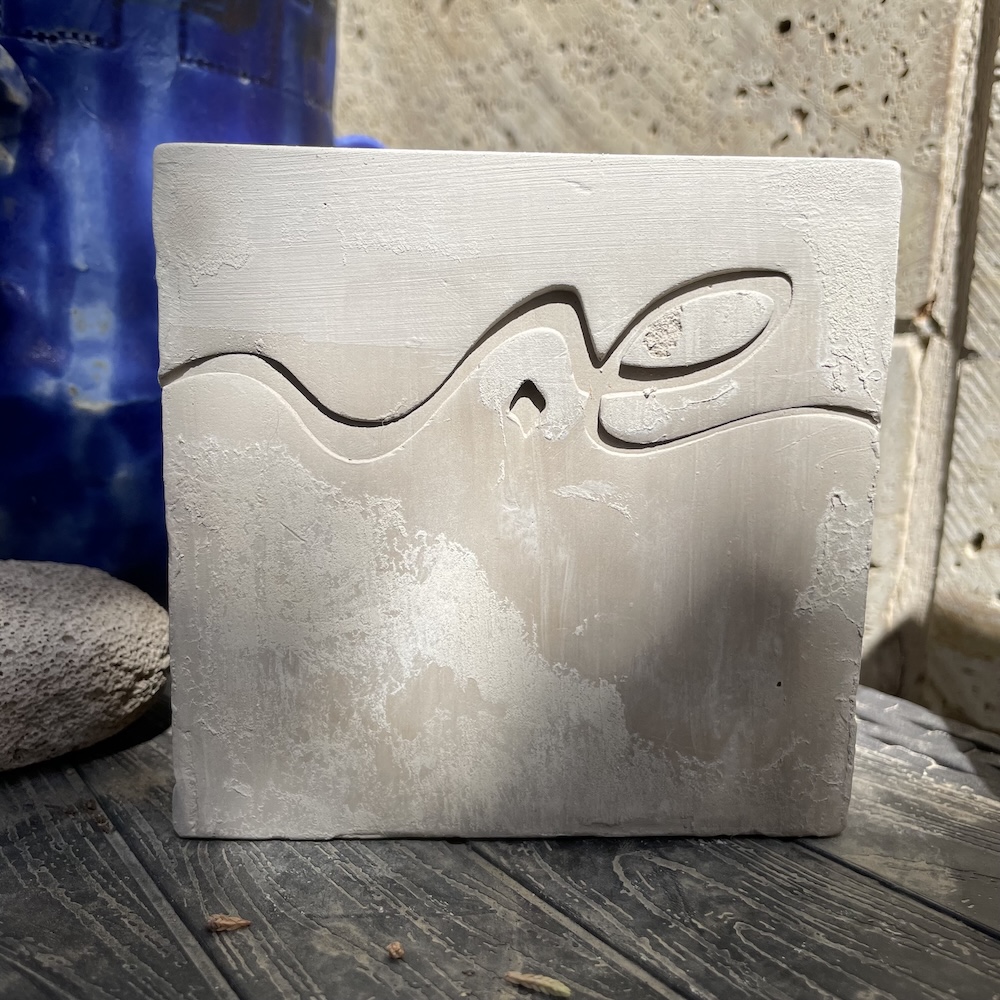
The making of the clay box involves moulding techniques (for the body) and slab-building (for the lid). Ceramics allow for particular attention to be paid to each piece, by varying the colours of the glazes, the textures and the shapes of the sound holes. It is a way of continuing to celebrate diversity whilst exploring new possibilities.
Experiments are currently underway using local clay, collected from the valleys of Jordan.
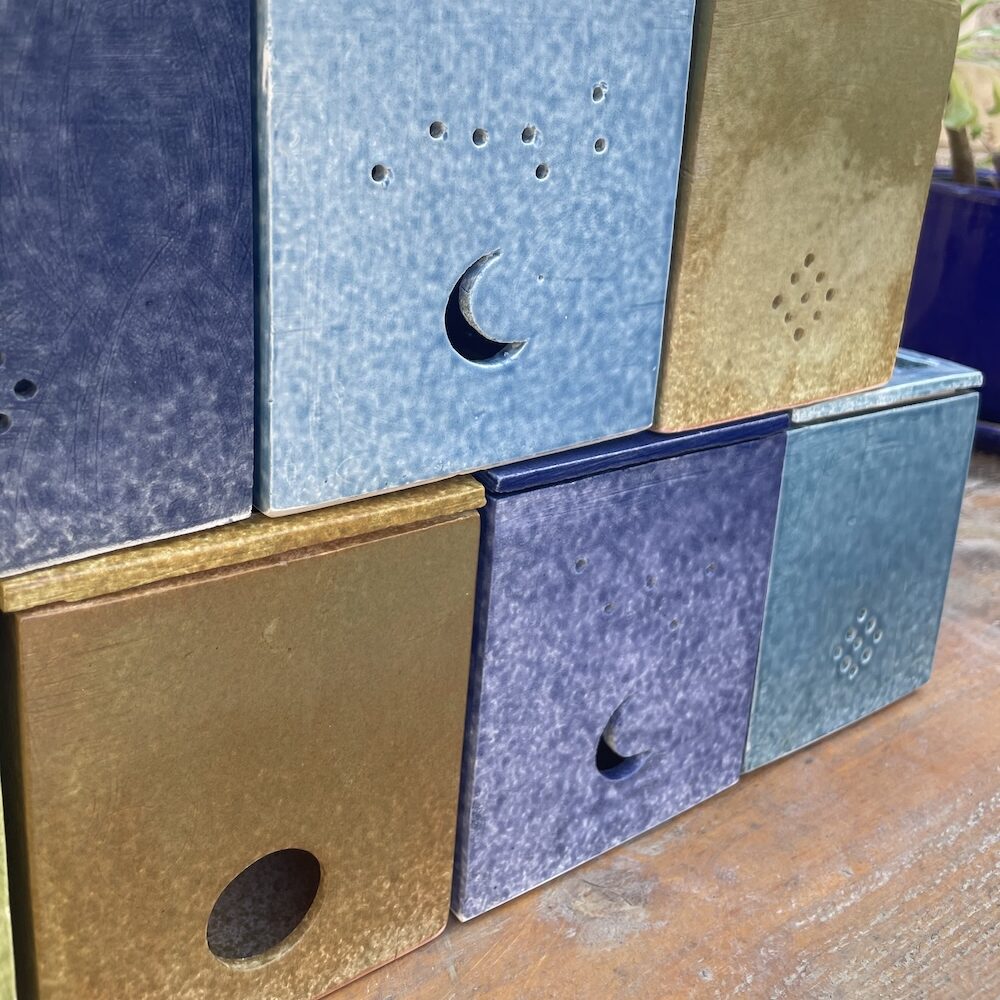
The sound box is handcrafted. Controlled by a microcontroller and fitted with a small 3-watt speaker, the sound resonates gently within the box and is played at a low volume throughout the room. (The volume will soon be slightly adjustable).
In keeping with a “low-tech” approach, the sound box is not battery-powered. We prefer to use low-voltage power (12V/5W), which is now widely available in homes (phone chargers, USB sockets on power strips). A USB cable connects to the sound box via a hole provided for this purpose in the ceramic box. In some cases, the cable is sourced from recycling schemes.
The hand-soldered circuit contains an internal clock capable of keeping time even when the box is not plugged in. The programme is set to play the calls to prayer every day at the appropriate time. As these times are calculated according to a solar calendar, the calls shift by a few minutes each day. Each box is programmed for a specific location and contains the prayer call times for three years .